Reviewing the Best Sports Photography Flash Units and Lighting Gear

If you’ve ever tried capturing a fast-paced sports event in low light, you already know how challenging it can be. Stadiums, gymnasiums, and arenas don’t always provide ideal lighting conditions. A well-timed flash, however, can make the difference between a dull, blurry frame and a vivid, high-impact shot that captures the intensity of the moment. For sports photographers who want every image to tell a story, mastering flash and lighting gear is absolutely essential.

The right lighting setup helps freeze movement, enhance colors, and bring life to even the most chaotic scenes. In this guide, we’ll break down the best flash units and lighting gear available today, along with tips on how to use them effectively for different sports environments.

Reviewing the Best Sports Photography Flash Units and Lighting Gear

The Power of Good Lighting in Sports Photography

Lighting is more than just illumination — it’s an artistic tool that defines the energy and emotion of an image. In sports photography, where every second counts, good lighting allows you to capture motion and emotion with accuracy. A subtle flash can highlight a sprinter’s muscles under strain, while diffused lighting can soften shadows on a basketball player’s face.

When you’re dealing with unpredictable weather, indoor shadows, or night events, the flash becomes your silent partner. It helps retain sharpness, avoids excessive noise in your images, and ensures that color accuracy isn’t lost due to uneven light. The right lighting gear also gives you creative control — whether you want to freeze sweat droplets midair or convey the drama of a dark, rain-soaked finish line.


What to Look for When Choosing Flash Units

Sports photographers don’t just need brightness; they need speed, control, and consistency. Here are some key features to consider when picking the perfect lighting setup:

  • High-Speed Sync (HSS): Lets you shoot with flash at shutter speeds beyond the normal sync limit (like 1/250s). Perfect for freezing high-speed motion without losing ambient light balance.
  • Fast Recycle Times: Rapid recovery between flashes allows for more continuous shooting during crucial moments.
  • Durability: Sports venues can be dusty, wet, or crowded. Choose flashes that can handle rough environments and long sessions.
  • Wireless Functionality: Off-camera lighting setups are easier to manage when you can trigger multiple flashes remotely.
  • Adjustable Output: Being able to tweak flash power manually gives you flexibility in balancing natural and artificial light.

Best Flash Units for Sports Photography in 2025

1. Godox V1 Pro
This flash has become a go-to for event and sports photographers alike. Its round head design creates soft, natural light, while its quick 1.5-second recycle time ensures you never miss a moment. The V1 Pro also supports wireless TTL and high-speed sync, making it a dependable choice for both indoor arenas and outdoor fields.

2. Canon Speedlite EL-5 / Nikon SB-5000 / Sony HVL-F60RM2
Each of these manufacturer-specific flashes is fine-tuned for speed and reliability. They excel in burst situations, delivering consistent light output with excellent color reproduction. Their compact build and intuitive controls make them ideal for on-the-go sports coverage.

3. Profoto A10
If you’re after professional-grade lighting, the Profoto A10 offers premium performance. Its output is smooth, and its battery endurance is exceptional. Bluetooth connectivity allows seamless control through your smartphone, giving you a portable studio setup even on the sidelines.

4. Godox AD300Pro / AD400Pro
When you’re shooting larger events or outdoor games, power is everything. The AD300Pro and AD400Pro strobes deliver robust output, fast recycling, and battery longevity. They’re lightweight, easy to transport, and built to handle demanding sessions.

5. Elinchrom ONE and Westcott FJ80 II
These compact, hybrid-friendly lights are designed for photographers who alternate between stills and video. Both provide balanced color temperatures, quick setup, and versatile mounting options — perfect for adapting to different environments quickly.


Accessories That Elevate Your Lighting Game

Even the best flash units perform better when paired with the right accessories. Here’s what every serious sports photographer should have in their kit:

  • Light Stands and Mounts: Keep your flashes steady and secure, even in windy outdoor conditions.
  • Softboxes and Diffusers: Help reduce harshness and create a more flattering, even spread of light.
  • Wireless Triggers: Reliable triggers ensure your off-camera flashes fire in sync with each shot.
  • Extra Batteries: Essential for endurance events or long tournament days where recharging isn’t an option.
  • Reflectors: Perfect for redirecting natural light when flash use isn’t allowed.

How to Use Flash Effectively During Sports Events

  1. Be Mindful of the Players: Avoid blinding athletes or interfering with gameplay. Aim your light strategically to minimize distraction.
  2. Master High-Speed Sync: Combine HSS with moderate flash output to capture sharp, vivid images in bright conditions.
  3. Mix Flash with Ambient Light: Let your flash fill in shadows rather than overpower the natural light available.
  4. Use Multiple Angles: Experiment with off-camera flashes placed around the field or court to create depth and texture.
  5. Arrive Early and Test: Conditions vary between venues — run lighting tests before the action begins.

Common Flash Mistakes to Avoid

  • Overpowering the Scene: Excessive flash can flatten your image or create unrealistic lighting.
  • Ignoring White Balance: Flash color temperature often differs from venue lighting; adjust accordingly to avoid unnatural tones.
  • Underestimating Battery Needs: Always bring spare batteries — flash recycle times slow dramatically with low power.
  • Overreliance on Built-In Flash: Pop-up flashes lack range and flexibility for high-speed events.
  • Not Understanding Venue Restrictions: Some arenas prohibit flash photography — know the rules before setting up.

Mixing Flash and Continuous Lighting

Many modern sports photographers use a hybrid setup that combines flash units with continuous LED panels. Continuous lights, such as the Aputure Amaran 60x II and Nanlite Forza 60B, provide constant illumination and allow you to preview how light falls on your subject in real time. These lights are especially useful for hybrid shooters working between photo and video during tournaments or press events.

Continuous lighting also creates a smoother workflow when switching between stills and clips, ensuring consistency in exposure and color grading. Pairing LED lights with your flash system gives you control over mood and motion — whether you’re highlighting a victorious moment or documenting the tension before the start.


Maintaining and Transporting Your Lighting Gear

Good lighting gear can be a significant investment, so maintenance matters. After each shoot:

  • Inspect Flash Heads and Ports: Check for dust or debris that can affect performance.
  • Store in Padded Bags: Protect against moisture and impact during travel.
  • Recharge Properly: Avoid overcharging batteries to extend their lifespan.
  • Use Silica Gel Packs: Prevent humidity damage inside your gear bag.

Keeping your equipment clean and dry not only ensures longevity but also guarantees consistent lighting results every time you shoot.

source: ego-shooters – photography – videography

Final Thoughts

Lighting is often the secret ingredient that separates professional-level sports photography from amateur snapshots. It captures not just the motion, but the emotion — the grit of a football tackle, the focus in a swimmer’s eyes, or the power in a sprinter’s stride. With the right combination of flash units, lighting accessories, and technique, you can freeze those decisive moments in vivid, cinematic detail.

As you experiment with your lighting setups, remember that every sport and venue presents a different challenge. Learn to adapt, stay patient, and treat light as part of the action rather than a technical afterthought. When used with creativity and precision, your flash becomes more than a tool — it becomes your artistic signature on every frame.

The written content on this page was generated by ChatGPT.
How Weatherproof Camera Gear Helps Sports Photographers Shoot in Any Condition

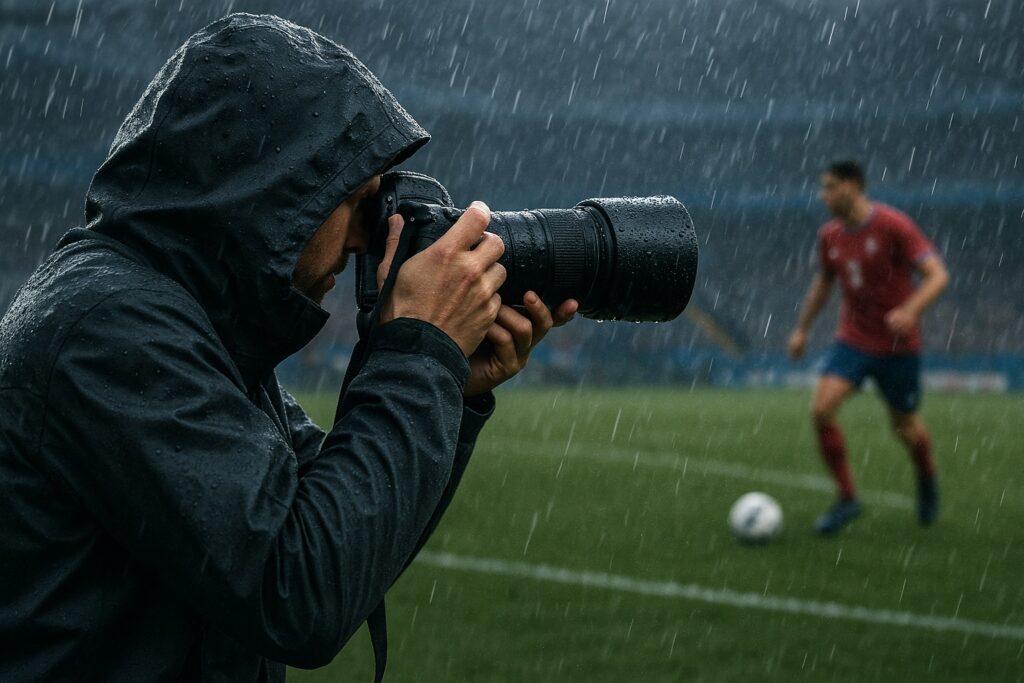
In the unpredictable world of outdoor sports, the weather doesn’t always cooperate. One moment the sun is shining, and the next, you’re facing heavy rain, blowing dust, or freezing winds. For sports photographers, these conditions can make or break a shoot. Having weatherproof camera gear not only protects your investment but also ensures you never miss the action — no matter what Mother Nature has planned.

This guide explores the importance of weather-sealed cameras and lenses, protective accessories, and shooting strategies that allow photographers to capture crisp, high-speed action in even the toughest environments.

How Weatherproof Camera Gear Helps Sports Photographers Shoot in Any Condition

Why Weatherproof Gear Matters in Sports Photography

Sports photographers are often on the sidelines, in the field, or at the track — not in controlled studios. Rain, mud, sand, or snow can easily damage sensitive electronics. Weatherproof gear provides the confidence to keep shooting, even when the conditions turn harsh.

A camera that can handle wind-blown dust during a motocross race or sudden rain at a soccer match ensures you never have to pack up early. Beyond protection, weather-sealed gear also helps maintain consistent image quality, preventing condensation, smudges, and lens fogging that can ruin your best shots.


Understanding Weather Sealing and Protection

Weather sealing doesn’t make a camera or lens completely waterproof, but it does make them resistant to moisture, dust, and temperature fluctuations. High-end cameras and lenses use rubber gaskets, seals, and durable materials to keep elements out.

Key Benefits of Weatherproof Gear:

  • Moisture Resistance: Prevents water from entering internal components during rain or snow.
  • Dust Protection: Keeps dirt and debris out when shooting in deserts, tracks, or fields.
  • Temperature Stability: Helps prevent condensation and mechanical issues in cold or hot climates.
  • Extended Longevity: Protects gear from corrosion and wear over time.

Best Weatherproof Cameras and Lenses for Sports Photography

Modern camera brands like Canon, Nikon, Sony, and Fujifilm have developed weather-sealed options for professionals and enthusiasts alike. When shooting outdoor sports, these are some features to prioritize:

  • Magnesium Alloy or Polycarbonate Body: Durable materials resist impact and harsh environments.
  • Sealed Buttons and Ports: Rubber gaskets around buttons, battery doors, and memory card slots prevent leaks.
  • Weather-Sealed Lenses: Pairing a sealed camera with a non-sealed lens defeats the purpose — make sure your lenses match your camera’s protection level.
  • Lens Hoods: Simple yet effective, lens hoods block rain and prevent glare.

Top Weather-Sealed Camera Lines (2025):

  • Canon EOS R5 / R6 Series
  • Nikon Z8 / Z9
  • Sony A9 III / A1
  • Fujifilm X-T5 / X-H2

Essential Accessories for Weather Protection

Even with sealed equipment, external protection adds another layer of safety. Consider investing in these practical accessories:

  • Rain Covers: Transparent covers allow you to operate your camera while keeping it dry.
  • Waterproof Bags or Cases: Protect gear during transport or long events.
  • Lens Filters: UV or clear protective filters shield your lens glass from rain or grit.
  • Microfiber Cloths: Quickly wipe away droplets without scratching surfaces.
  • Silica Gel Packs: Prevent moisture buildup in your gear bag.

Techniques for Shooting in Challenging Weather

When the weather turns rough, the right approach can make a huge difference. Here are a few strategies professional sports photographers swear by:

  1. Plan for the Environment: Check forecasts and prepare appropriate covers and cleaning tools.
  2. Adjust Your Settings: In low light caused by clouds or rain, open your aperture wider or raise ISO carefully.
  3. Use Burst Mode: Rain and snow can distort focus. Shooting in bursts increases the chance of crisp frames.
  4. Mind the Light: After storms, diffused light creates soft shadows and vibrant colors — perfect for dynamic action shots.
  5. Protect Between Shots: When possible, shield your camera under a jacket or umbrella until the action begins.

Post-Shoot Care: Maintaining Weatherproof Gear

Proper maintenance keeps your equipment in top shape for the long run.

  • Dry Thoroughly: After exposure to rain or humidity, wipe gear dry with a soft towel.
  • Inspect Seals and Ports: Check for debris or moisture around buttons and seams.
  • Store Correctly: Keep gear in a dry, temperature-controlled environment.
  • Regular Servicing: Have your camera inspected periodically by professionals for seal integrity.

Common Mistakes to Avoid

  • Assuming Weatherproof Means Waterproof: Even the best-sealed cameras can’t handle full submersion.
  • Ignoring Lens Pairing: Using an unsealed lens on a weather-sealed body invites moisture and dust inside.
  • Skipping Maintenance: Small cracks or worn seals can compromise protection over time.
  • Underestimating Cold Effects: Batteries drain faster in low temperatures — carry extras.
source: Paul Rutherford

Conclusion

For sports photographers, unpredictable weather doesn’t have to be a limitation. Investing in weatherproof gear ensures you’re ready to capture decisive moments — from rain-soaked football matches to sun-drenched cycling tours — without worrying about your equipment. The right combination of gear, preparation, and care empowers you to deliver exceptional images in any condition.

With experience and reliable tools, you’ll learn that sometimes, the best sports photos come from the toughest conditions — when the elements meet the action and you’re ready to capture it all.

The written content on this page was generated by ChatGPT.
Top Memory Cards for Fast Continuous Shooting in Sports Events

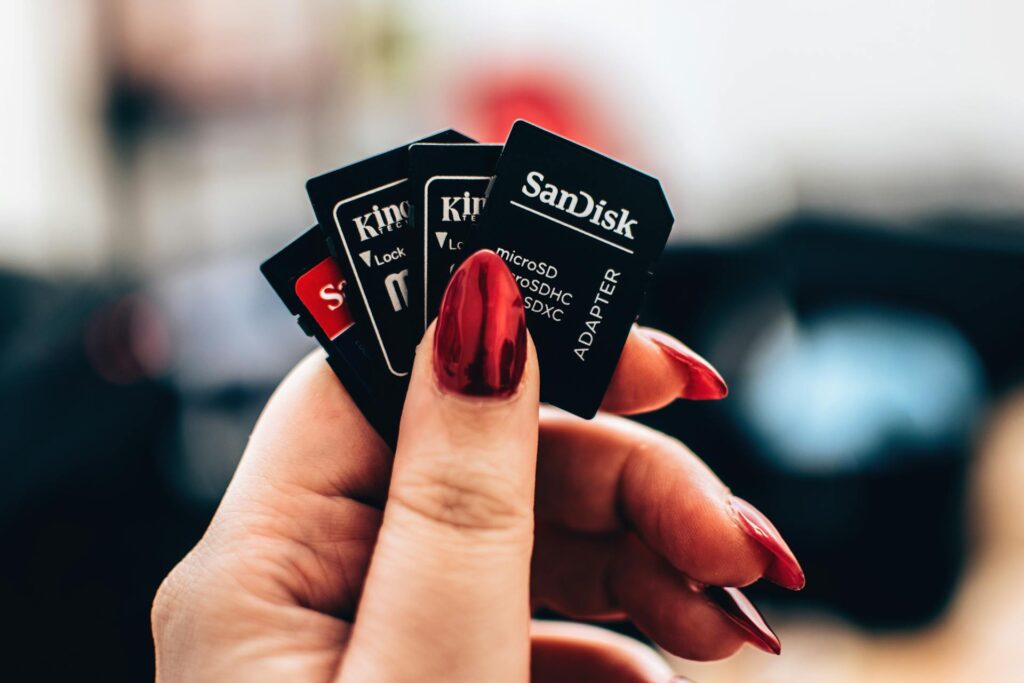
Sports photography is all about timing. The difference between an average shot and an unforgettable image often comes down to a split second. Think about a soccer player’s final kick, a basketball dunk, or a cyclist racing toward the finish line—these moments happen in an instant, and missing them isn’t an option. While most photographers focus on cameras and lenses, memory cards are often overlooked. Yet, they play a crucial role in making sure your camera can keep up with the nonstop pace of sporting events.

This article takes a closer look at the importance of memory cards in sports photography and highlights the best options for continuous shooting. By the end, you’ll know exactly what to look for and which cards can handle the intensity of high-speed action.

Why Memory Cards Are Vital for Capturing Sports Action

When covering live sports, your camera’s ability to shoot continuously without interruptions can make or break your results. Every camera has a buffer that temporarily stores images before writing them to the card. If the card isn’t fast enough, the buffer fills up and the camera freezes until it catches up. That pause could cost you the defining shot of the game.

Fast memory cards solve this problem. They quickly write large amounts of data, allowing you to shoot long bursts without slowdown. This is particularly important if you’re shooting in RAW or recording high-resolution video, both of which require more storage speed and capacity.

Key benefits of a fast memory card include:

  • Sustained burst shooting without interruption
  • Shorter transfer times when moving files to a computer
  • Better reliability in demanding environments

Features That Matter Most

Choosing the right memory card isn’t just about buying the most expensive one on the shelf. Photographers should consider several features that impact performance:

  • Write Speed: This is the most critical factor for continuous shooting. Look for cards with high sustained write speeds, not just peak numbers.
  • Read Speed: Determines how fast you can transfer files to your computer. Useful for professionals who need quick turnarounds.
  • Capacity: Sports events produce thousands of frames, especially in RAW format. Cards of 128GB or larger are recommended for extended shoots.
  • Durability: Outdoor conditions can be unpredictable. Cards resistant to water, heat, and impact provide peace of mind.
  • Compatibility: Not every card type works with every camera. Always check your camera manual before making a purchase.

Best Memory Cards for Sports Photography in 2025

After comparing performance, durability, and reliability, here are some of the top options available for photographers who need speed and consistency.

1. SanDisk Extreme Pro CFexpress Type B

One of the fastest cards on the market, it boasts write speeds up to 1400MB/s. Ideal for photographers using flagship cameras with rapid burst modes, this card ensures zero lag and exceptional reliability.

2. Sony TOUGH-G Series SDXC UHS-II

Built for durability, this card resists bending, dust, and moisture. With write speeds of up to 299MB/s, it’s a great choice for continuous RAW bursts and 4K video recording.

3. Lexar Professional CFexpress Type B Gold Series

Balancing performance and affordability, the Gold Series delivers write speeds around 1000MB/s. It’s suitable for covering fast-paced sports like cycling, football, and track events.

4. ProGrade Digital SDXC UHS-II V90

This card offers write speeds of 250MB/s, making it a dependable option for action shooters. It’s also known for strong consistency, meaning fewer performance drops during long bursts.

5. Delkin Devices Power CFexpress

Engineered for professionals, this card handles not only photography but also demanding 8K video workflows. Its reliability ensures you won’t miss crucial moments, even during extended coverage.


Practical Tips for Managing Memory Cards at Events

Even the best card won’t save you if you don’t manage it properly. Here are a few habits that every sports photographer should adopt:

  • Carry Extras: Bring several cards to avoid running out of space during long tournaments.
  • Organize and Label: Mark your cards clearly to avoid confusion when swapping them quickly.
  • Backup During Breaks: Use a portable drive or laptop to offload images regularly, reducing the risk of data loss.
  • Avoid Overfilling: Leave a small margin of unused space to minimize the risk of corruption.

Mistakes to Avoid

  • Relying on Old Cards: Older memory cards often can’t handle the demands of modern high-speed cameras.
  • Ignoring Card Specs: Some cards advertise high read speeds but don’t deliver when it comes to sustained write speeds. Always check both.
  • Buying Only on Price: A cheap card might work for casual shooting, but it could fail when you need it most during a live event.

source: Stefan Malloch

In sports photography, speed isn’t just about the athletes—it’s about your gear too. Memory cards may be small, but they are the backbone of fast continuous shooting. Investing in high-speed, durable cards like CFexpress or UHS-II models ensures your camera performs at its best when it matters most.

The right card will keep your workflow smooth, your files safe, and your shooting uninterrupted. Whether you’re documenting a marathon, a basketball championship, or a high-octane cycling race, the right memory card ensures that you never miss a defining moment. In the end, it’s a small investment that pays off in big ways when capturing the thrill and energy of live sports.

The written content on this page was generated by ChatGPT.

Best Camera Bags and Cases for Sports Photographers

Covering live sports is one of the most demanding types of photography. Unlike studio or landscape photography where conditions are more predictable, sports photographers face constant movement, changing weather, and the need to react in split seconds. In these situations, having the right camera bag is more than a convenience—it’s a necessity. A bag or case designed with sports in mind ensures that every lens, memory card, and accessory is secure yet accessible, allowing you to focus on the action in front of you.

This article explores the best camera bags and cases for sports photographers, focusing on design, functionality, and durability. We’ll also share tips on how to choose a bag that fits your style of shooting, whether you’re chasing cyclists on winding roads or working along the sidelines of a football field.

Best Camera Bags and Cases for Sports Photographers

Why the Right Camera Bag Matters in Sports Photography

When every second counts, fumbling for gear can mean missing the winning goal or the decisive sprint to the finish line. A well-chosen bag allows you to move confidently through crowds, access your camera without delay, and protect your equipment from the elements. Unlike casual photography, sports coverage often involves multiple lenses, long hours, and the need to switch locations quickly. That’s why durability, comfort, and organization should be top priorities.

Think of your bag as part of your toolkit. It needs to be rugged enough to withstand travel, weather, and constant use, while still being comfortable enough to carry during long days. A poorly designed or uncomfortable bag can drain your energy and distract you from capturing the action.


Features Sports Photographers Should Prioritize

Before looking at specific bag types and models, let’s review the features that matter most:

  • Weather Protection: Outdoor events often expose gear to rain, dust, or direct sun. Bags with weather-sealed zippers, waterproof fabrics, or built-in rain covers provide peace of mind.
  • Fast Access Points: Sports photography is about timing. Side access panels or top-loading designs let you grab your camera instantly.
  • Comfort and Support: Long events can stretch over several hours. Bags with padded shoulder straps, waist belts, or ergonomic designs reduce fatigue.
  • Adjustable Compartments: Different events may require different setups. Modular dividers allow you to reconfigure the bag depending on the gear you need that day.
  • Capacity and Mobility: Consider whether you’ll be traveling light with one camera and lens or carrying a full kit with multiple telephoto lenses.

Types of Camera Bags for Sports Photography

Backpacks

Backpacks remain one of the most popular choices for sports photographers. They offer balance and even weight distribution across both shoulders, making them ideal for all-day coverage. A high-quality backpack often includes reinforced padding and customizable dividers, giving photographers room for multiple lenses, a laptop, and accessories.

Sling Bags

If mobility is your main concern, sling bags are hard to beat. They’re designed to swing around quickly, providing immediate access to your gear. This makes them ideal for shooting fast-paced sports where every second counts. However, they typically hold less equipment than a full backpack.

Messenger Bags

Messenger-style bags offer convenience and quick access while remaining more compact. They work well for photographers who need to carry just the essentials: a body, a zoom lens, and maybe one or two accessories. While not suited for heavy gear, they shine in situations where mobility and discretion are important.

Roller Cases

When the event calls for transporting multiple camera bodies and large telephoto lenses, roller cases are a reliable option. Built like luggage, they make moving heavy loads more manageable. They’re especially helpful for photographers covering indoor sports or stadium events where walking distances aren’t too long.

Hard Cases

For maximum protection, nothing beats a hard-shell case. Built to resist impact, dust, and water, hard cases are often used by traveling photographers. They ensure that expensive gear arrives in top condition, even in the toughest environments.


Recommended Camera Bags and Cases for Sports Photographers in 2025

  1. Lowepro ProTactic BP 450 AW II
    Known for its rugged design, this backpack combines versatility with durability. Side access zippers make it easy to grab a camera without removing the bag completely, and the adjustable dividers provide flexible organization.
  2. Peak Design Everyday Sling 10L
    Compact and efficient, this sling bag is perfect for photographers who prefer to travel light. It can hold a camera body with a zoom lens and has clever compartments for accessories.
  3. Think Tank Photo Airport Security V3.0 Roller
    A staple among professionals, this roller case is built for travel. It accommodates large telephoto lenses and multiple bodies while still meeting carry-on size restrictions.
  4. Pelican Air 1535 Hard Case
    Offering unparalleled protection, the Pelican Air is waterproof, crushproof, and dustproof. It’s the go-to choice for photographers who fly frequently or need maximum security for their gear.
  5. Tenba Shootout 24L Backpack
    Designed with outdoor shooters in mind, this lightweight backpack combines weather resistance with comfort. Its smart layout and strong build make it ideal for field sports and cycling coverage.

Tips for Selecting the Right Bag for Your Workflow

  • Match Bag Size to the Event: For quick, mobile coverage like marathons or cycling events, smaller sling or messenger bags are more practical. For football, basketball, or stadium sports, larger backpacks or roller cases provide better storage.
  • Think Ahead: Choose a bag that leaves room for future upgrades. If you plan to add a 400mm lens later, ensure your bag can accommodate it.
  • Comfort First: A heavy bag without proper support will take its toll during long events. Always test how it feels when fully loaded.
  • Security Considerations: Sports events often mean crowds. Opt for bags with hidden compartments or lockable zippers to keep valuables safe.

source: Chris Hau

The right camera bag isn’t just about carrying equipment—it’s about enabling you to perform at your best. Sports photographers face unpredictable conditions, long hours, and constant movement, which is why your bag should provide protection, comfort, and efficiency. From lightweight slings that keep you agile to heavy-duty rollers built for major events, the options are vast, but the best choice is always the one that complements your unique workflow.

Investing in the right bag ensures that your attention stays where it belongs—on the athletes, the plays, and the defining moments that make sports photography so powerful. With gear safely stored and easily accessible, you’ll be ready to capture the kind of images that bring the excitement of the game to life.

The written content on this page was generated by ChatGPT.

Comparing DSLR vs Mirrorless Cameras for Sports Photography

There’s nothing quite like the thrill of freezing a moment during a fast-paced sports match—the precise second a cyclist leans into a turn, or a basketball player leaps toward the net. But achieving those perfect shots often comes down to the camera in your hands. For years, sports photographers have debated: Should you use a DSLR or go mirrorless? Both camera types offer advantages, but understanding how each performs in a live, action-heavy environment is key.

In this guide, we’re taking a deeper dive into what separates DSLRs and mirrorless cameras specifically for sports photography. From autofocus performance to burst rates and battery longevity, we’ll break down what matters most when you’re shooting at speed.

Comparing DSLR vs Mirrorless Cameras for Sports Photography

Understanding the Core Differences

Before we jump into performance details, let’s quickly outline how DSLRs and mirrorless cameras differ.

  • DSLR (Digital Single-Lens Reflex): These cameras use a mirror and prism system to direct light from the lens to the optical viewfinder. When you press the shutter, the mirror flips up, allowing light to hit the sensor.
  • Mirrorless: As the name implies, these cameras don’t use a mirror. Instead, light hits the sensor directly, and you preview the image using an electronic viewfinder (EVF) or LCD screen.

The absence of a mirror mechanism in mirrorless cameras allows for design flexibility, speed improvements, and weight reduction. But how do these differences translate into performance on the field?


Autofocus Performance in Real-Time Action

One of the biggest priorities for sports photographers is autofocus reliability. Fast-moving subjects and unpredictable changes in direction can challenge even the best cameras.

  • DSLRs: Professional DSLRs, like the Nikon D6 or Canon EOS-1D X Mark III, feature highly advanced phase-detection autofocus systems. These are time-tested and perform exceptionally well through the optical viewfinder.
  • Mirrorless: The latest mirrorless cameras, including the Sony A9 II, Canon EOS R3, and Nikon Z9, have revolutionized autofocus. They use sensor-based phase detection and AI-enhanced subject tracking, allowing the camera to lock onto athletes’ eyes or helmets with impressive accuracy—even when they’re in motion.

Verdict: Mirrorless cameras, especially the high-end models, now edge out DSLRs thanks to real-time, AI-assisted AF tracking that excels under pressure.


Burst Shooting: Capturing the Perfect Split-Second

When you’re trying to capture a fast-moving sequence—like a sprinter crossing the finish line—burst rate is critical.

  • DSLRs: Many high-end DSLRs offer burst shooting up to 14-16 frames per second (fps) with full autofocus and exposure metering. However, these speeds often rely on a mechanical shutter, which introduces slight lag and noise.
  • Mirrorless: Mirrorless systems can go beyond that. With electronic shutters, they shoot up to 20 fps (or even more), silently and without viewfinder blackout. This allows you to see and capture the action as it happens without interruption.

Verdict: Mirrorless cameras have taken the lead here, offering not just higher frame rates, but smoother, quieter operation.


The Viewfinder Debate: Optical vs Electronic

  • DSLRs: Optical viewfinders provide a direct, real-time view of the scene with no delay. Many sports photographers still appreciate the clarity and reliability, especially in bright outdoor settings.
  • Mirrorless: EVFs have come a long way. They now offer high refresh rates, minimal lag, and even show exposure, white balance, and depth of field adjustments in real-time.

Verdict: It comes down to preference. Some photographers prefer the natural look of an OVF, while others love the preview control of an EVF.


Battery Life in the Field

You’re likely to be shooting for hours at a sports event, so battery life matters more than most people realize.

  • DSLRs: Known for their stamina, DSLRs often last over 1,000 shots on a single charge. Their power-efficient optical systems conserve battery over long shoots.
  • Mirrorless: Historically weaker in this category, mirrorless battery life has improved but generally remains lower, with many models offering 500–700 shots per charge.

Verdict: DSLRs win this round, making them more reliable for full-day events without spare batteries.


Lens Availability and Compatibility

  • DSLRs: Boast decades-long ecosystems. Canon EF and Nikon F mount systems include everything from ultra-wide to super-telephoto, with options for every budget.
  • Mirrorless: New systems like Canon RF, Nikon Z, and Sony E are growing rapidly. While native lens options continue to expand, users can also adapt DSLR lenses—with varying degrees of compatibility and performance.

Verdict: DSLRs offer more mature ecosystems—for now. Mirrorless lens options are catching up quickly, especially with native glass designed for speed and sharpness.


Size, Weight, and Mobility

  • DSLRs: Often large and heavy due to the mirror assembly and robust construction. While durable, they can be tiring to carry all day.
  • Mirrorless: Designed for portability, mirrorless bodies are lighter and more compact. This is a big win when you’re moving between fields, courts, or tracks.

Verdict: Mirrorless wins on mobility, especially when shooting handheld or in tight spaces.


Value for Your Investment

  • DSLRs: Offer incredible value, especially with used or older models. You can get pro-level performance at a lower cost.
  • Mirrorless: Higher initial cost, but you gain advanced tech and long-term relevance as the industry shifts away from DSLR systems.

Verdict: DSLR for budget-conscious buyers. Mirrorless for future-proof features.

source: Wex Photo Video

Choosing the Right Tool for the Job

If you’re entering the world of sports photography or upgrading your gear, both camera systems can serve you well—but your choice should reflect your priorities.

Consider a DSLR if:

  • You already own lenses compatible with your system
  • You need long battery life for extended shoots
  • You’re looking for high performance at a lower price

Consider Mirrorless if:

  • You want faster, smarter autofocus with face and eye tracking
  • Portability and quiet shooting matter
  • You’re ready to invest in the latest technology with long-term benefits

Sports photography isn’t just about having the best specs—it’s about understanding your gear and knowing how to use it under pressure. Mirrorless cameras may be the future, but DSLRs still hold their ground in many real-world scenarios. Whichever path you choose, remember: the best camera is the one you know well and can rely on when the action unfolds.

The written content on this page was generated by ChatGPT.
Tripods vs. Monopods: Finding Stability in the Fast-Paced World of Sports Photography

Photographing sports isn’t just about timing your shutter right—it’s also about staying steady in the chaos. Whether you’re tracking a soccer player sprinting toward the goal, capturing the arc of a tennis serve, or freezing the moment a cyclist hits top speed, having reliable support for your camera is critical. Without it, even the best composition can fall apart due to blur or poor framing. That’s where tripods and monopods step in.

But choosing between the two (and knowing which models perform best) can be tricky. In this guide, we’ll dive into why stability matters in sports photography, examine the real-world pros and cons of tripods versus monopods, and recommend standout options for both amateur and professional photographers alike.

Tripods vs. Monopods: Finding Stability in the Fast-Paced World of Sports Photography

The Hidden Advantage of Stability

Many sports photographers get caught up in chasing faster shutter speeds and forget a fundamental rule—stability equals sharpness. Even with a powerful lens, slight vibrations can cause motion blur, especially during prolonged sessions or in low light. A stable camera platform gives you more control, sharper images, and less physical strain over time. And when your lens is heavy (think 300mm and beyond), shooting handheld becomes less of an option and more of a liability.

Tripods or Monopods: Which One Belongs in Your Kit?

Let’s break it down:

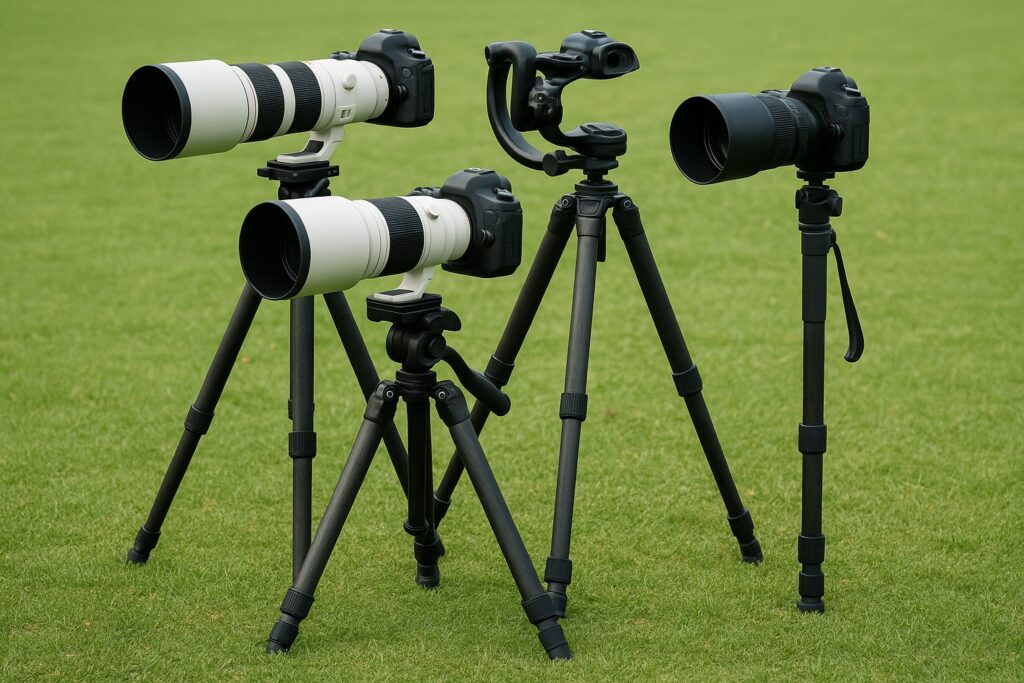
Tripods are best for static shooting situations. If you’re covering an event where you have a designated spot—like a finish line, corner flag, or elevated press box—a tripod gives you rock-solid support. You can mount your camera, compose your frame, and wait for the action to unfold.

Monopods, on the other hand, shine in fast-paced, mobile environments. They’re easier to carry, faster to set up, and allow for greater flexibility in positioning. They’re the go-to tool for sideline shooters who need to follow the action without lugging around a bulky tripod.

Top Tripods for Sports Photographers

1. Manfrotto 055 Aluminum Tripod

This tried-and-true model has long been favored by sports and wildlife photographers for its dependable build and smooth adjustments. Its quick power lock system and multi-angle center column make it adaptable for tough angles and uneven terrain.

  • Weight: 5.5 lbs
  • Max Height: 66.9 inches
  • Load Capacity: 19.8 lbs
  • Ideal For: Heavier DSLR setups, long telephoto lenses

2. Gitzo GT3543LS Systematic Series 3

If you need serious support in the field, this carbon fiber tripod delivers. It’s modular, strong, and light enough to carry to remote locations. It’s built for professionals who don’t want to compromise on stability.

  • Weight: 4.3 lbs
  • Max Height: 57.5 inches
  • Load Capacity: 55 lbs
  • Ideal For: Studio-quality sports shooting in outdoor conditions

3. Benro Mach3 TMA38CL Carbon Fiber Tripod

Benro’s carbon fiber line offers an excellent balance of performance and price. It’s lightweight enough for travel but stable enough for serious gear. Its rubber feet can be swapped for metal spikes—perfect for fields and stadiums.

  • Weight: 4.5 lbs
  • Max Height: 69.7 inches
  • Load Capacity: 35.3 lbs
  • Ideal For: Versatile sports photography across different terrains

Leading Monopods That Excel in the Field

1. Manfrotto XPRO Monopod+

Quick to deploy and built like a tank, the XPRO Monopod+ is one of the most trusted tools for fast-action shooters. The fluid base option adds stabilization during pans and tilts, especially helpful during side-to-side tracking.

  • Weight: 2.4 lbs
  • Max Height: 79.9 inches
  • Load Capacity: 17.6 lbs
  • Best For: Sideline sports where rapid movement is required

2. Sirui P-326 Carbon Fiber Monopod

This six-section monopod folds down small, yet extends tall enough for comfortable eye-level shooting. Its foam grip and wrist strap add security, and the carbon fiber construction means it’s light enough for long shoots.

  • Weight: 0.9 lbs
  • Max Height: 61.4 inches
  • Load Capacity: 22 lbs
  • Best For: Travel and quick setup without compromising durability

3. Gitzo GM4552L Series 4 Monopod

With industrial-grade carbon fiber and a maximum load capacity of over 60 lbs, this Gitzo monopod is ideal for photographers using large, fast lenses. It’s longer than most models, giving added reach at field events or racetracks.

  • Weight: 1.5 lbs
  • Max Height: 74.8 inches
  • Load Capacity: 66 lbs
  • Best For: Pro-level gear and demanding environments

Practical Tips for Maximizing Stability at Events

  • Scout the Venue: Arrive early and identify where tripods are permitted. Some stadiums prohibit them outside designated media zones.
  • Use a Gimbal or Ball Head: These allow smooth, fluid movement while keeping your camera balanced.
  • Avoid Full Extension: Only extend the legs or monopod column as much as needed. Overextending compromises stability.
  • Support with Your Body: Use your legs or arms to anchor your gear, especially with monopods.
  • Balance the Load: Make sure your camera is properly mounted and centered to prevent tipping or slipping.
source: Beyond the Game

Invest in Stability to Elevate Your Work

In the world of sports photography, a split-second can mean the difference between a forgettable photo and a gallery-worthy capture. Don’t let poor stability hold you back. Whether you need the fixed security of a tripod or the nimble support of a monopod, investing in quality gear pays off in sharper images, smoother motion tracking, and less fatigue.

These tools are more than accessories—they’re extensions of your shooting technique. When matched with the right strategy and setting, a tripod or monopod can help you confidently shoot the high-speed action that defines sports photography.

The written content on this page was generated by ChatGPT.

Best Lenses for Sports Photography: Zoom vs. Prime Explained

You’ve got the perfect angle. The light is golden. The crowd is roaring. But when the cyclist flies past or the quarterback makes that game-changing throw, your lens—your most vital piece of gear—will either nail the moment or let it slip away. The truth is, the lens you choose can have a bigger impact on your sports photography than the camera itself.

Among the many gear decisions photographers face, one stands out more than most: zoom lenses versus prime lenses. Each has distinct advantages and trade-offs, and knowing which to use can define the outcome of your shoot.

This comprehensive guide takes a deep dive into both types of lenses. We’ll explore how they function, when each one shines, and how they compare in real-life sports scenarios. Whether you’re a beginner trying to find the best all-around option or a seasoned shooter looking to refine your kit, this article will help you choose the best lens for the action.

Best Lenses for Sports Photography: Zoom vs. Prime Explained

Understanding the Role of the Lens in Sports Photography

Capturing fast-moving athletes in the heat of competition is about more than just freezing motion. It’s about storytelling. The right lens brings your subject into focus while separating them from the chaos around them. It allows you to react quickly, compose dynamically, and adapt to lighting conditions on the fly. For sports photographers, lens performance is everything.

Let’s break it down by comparing zoom and prime lenses across the factors that matter most.


Zoom Lenses: Built for Adaptability

Zoom lenses are designed with variable focal lengths, which means you can cover a wide range of perspectives without switching your lens. For sports photographers, this adaptability is a huge advantage—especially when movement is unpredictable or your position is fixed.

Advantages of Zoom Lenses:

  • Versatility in a Single Package: With a zoom lens, you can easily reframe your shot, go wide for group moments, or zoom in to isolate a single athlete. This makes it ideal for field sports like soccer, football, or rugby.
  • Fewer Interruptions: Not having to switch lenses saves valuable seconds and helps reduce the risk of missing key moments.
  • Field Flexibility: Zooms allow you to work from the sidelines without sacrificing reach or creativity.

Limitations of Zoom Lenses:

  • Weight and Bulk: Quality zoom lenses tend to be heavier and longer, which can be a challenge during long shoots.
  • Compromise in Aperture: Budget and mid-range zooms often have variable apertures, which limit performance in dim lighting.
  • Slight Drop in Image Quality: Though today’s high-end zooms have improved tremendously, prime lenses still tend to be sharper.

Top Zoom Lenses for Sports Photography:

  • Canon RF 70-200mm f/2.8L IS USM
  • Nikon Z 70-200mm f/2.8 VR S
  • Sony FE 200-600mm f/5.6-6.3 G OSS
  • Tamron 70-180mm f/2.8 Di III VXD (Sony E-mount)

Prime Lenses: Designed for Performance

A prime lens has a fixed focal length, which forces photographers to be more deliberate with positioning and composition. However, what you sacrifice in flexibility, you gain in speed, sharpness, and subject separation—qualities that matter a lot when shooting fast action.

Advantages of Prime Lenses:

  • Superior Sharpness: The fixed optical design leads to cleaner, crisper images with more detail.
  • Wider Apertures: Primes like the 300mm f/2.8 allow faster shutter speeds and better low-light shooting—crucial for evening games or indoor arenas.
  • Shallower Depth of Field: Helps isolate the subject against blurred backgrounds, adding professional polish to your shots.

Drawbacks of Prime Lenses:

  • Less Flexible: You’re locked into a single focal length. To reframe a shot, you have to physically move.
  • Lens Changes Are Often Necessary: Covering a full event may require you to carry multiple primes.
  • Cost Factor: High-end telephoto primes are some of the most expensive tools in photography.

Best Prime Lenses for Sports Photography:

  • Canon RF 400mm f/2.8L IS USM
  • Nikon AF-S NIKKOR 300mm f/2.8G ED VR II
  • Sony FE 135mm f/1.8 GM (ideal for indoor or close-field action)
  • Sigma 500mm f/4 DG OS HSM Sports

Zoom vs. Prime: Which One Should You Choose?

When deciding between a zoom and a prime lens for sports photography, consider the specific environment and your shooting style. There is no universally “better” option; it’s about fit and function.

Use Zoom Lenses If:

  • You’re shooting from varying distances or moving between positions.
  • You photograph a variety of sports and need flexibility.
  • You’re a beginner or looking for a single, all-in-one lens solution.

Use Prime Lenses If:

  • You know your shooting location and distances ahead of time.
  • You want the highest image quality and performance, especially in low light.
  • You are working in controlled or consistent environments like arenas or racetracks.

In many cases, professional sports photographers carry both. A 70-200mm zoom might handle the mid-range action, while a 400mm prime gets used for long-distance captures. It’s about building a kit that works for your most common situations.


Real-World Examples: Choosing Based on the Sport

  • Basketball: Indoors, fast-paced, and relatively close—favor a prime like 85mm f/1.8 or 135mm f/1.8 for low light and shallow depth.
  • Football or Soccer: Outdoor and large-field sports benefit from the versatility of a 70-200mm or even a 100-400mm zoom.
  • Track and Field: You may want a 300mm or 400mm prime, depending on the distance from your subject.
  • Tennis: Often shot with primes around 135mm or zooms like 70-200mm to follow players across the court.
source: Joris Hermans

Make Your Gear Work for You

Your lens is your storytelling tool. Whether you choose a zoom or prime lens for sports photography, it should match your workflow, subject matter, and creative vision. Beginners may find a zoom lens more forgiving and practical. Seasoned photographers may appreciate the edge that a prime lens delivers in terms of image quality and low-light performance.

Ultimately, great photos come from knowing your gear, understanding the game you’re shooting, and being prepared for the unexpected. The best lens is the one that helps you be in the right place, at the right time, with the right tools to capture unforgettable moments.

The written content on this page was generated by ChatGPT.

Top Cameras for Capturing Sports Action in 2025

Sports photography has always demanded a combination of fast reflexes, technical know-how, and the right gear. But as we move into 2025, the line between the professional and enthusiast markets has become increasingly blurred. Innovations in autofocus, sensor technology, and AI-driven features have made it possible for photographers at all levels to achieve stunning results—even when shooting high-speed, unpredictable action. Whether you’re capturing the fury of a downhill mountain biker or the quick cuts of a soccer forward, the camera you choose will have a huge impact on your ability to tell that story with clarity and intensity.

This guide explores the best cameras on the market in 2025 for shooting sports. We’ll go beyond the spec sheets to explain what really makes these models stand out and why they excel in dynamic, fast-paced environments.

Top Cameras for Capturing Sports Action in 2025

What Makes a Camera Ideal for Sports Photography?

Not all cameras are built to handle the specific challenges of sports photography. When choosing a body to track motion and capture fleeting moments, consider these key attributes:

  • Advanced Autofocus Tracking: Sports subjects rarely move in straight lines. You need a camera that can lock on and follow erratic motion reliably.
  • High Burst Rate: A camera capable of shooting 10 to 30 frames per second (or more) allows you to catch the perfect expression or critical moment.
  • Large Buffer and Fast Write Speed: Shooting bursts is only useful if the buffer doesn’t fill up too fast. The faster your camera writes to the card, the less downtime you have.
  • Durability and Weather Resistance: Sports aren’t always played under sunny skies. A rugged camera ensures reliability no matter the conditions.
  • Strong Low-Light Performance: Many sports take place indoors or in variable lighting. A wide ISO range and clean high-ISO output are essential.

Let’s take a closer look at the top camera picks for this year and why they’ve made the cut.


1. Canon EOS R1

Top Choice for Professional Sports Shooters

The long-awaited EOS R1 has cemented Canon’s position in the professional mirrorless arena. Combining a full-frame stacked sensor with machine-learning-based subject recognition, this camera is built for those who shoot the Olympics, the NFL, or anything in between.

  • Sensor: 45MP stacked full-frame CMOS
  • Burst Shooting: Up to 30 fps (electronic shutter)
  • AF System: Dual Pixel CMOS AF with deep learning for tracking multiple subjects
  • ISO Range: 100–102,400, with excellent high-ISO performance
  • Build: Fully weather-sealed magnesium alloy body

In Practice: The R1’s real-world responsiveness is where it shines. The autofocus locks on with uncanny precision, even when subjects move erratically. Sports photographers praise its ability to stay with the action even in crowded or fast-changing scenes.


2. Sony A1 II

For Creators Who Demand Speed and Detail

Sony’s flagship mirrorless update blends high-resolution capture with insane speed. The A1 II delivers true hybrid capabilities, making it ideal for sports photographers who also shoot video or require detailed stills for large-scale prints.

  • Sensor: 50MP stacked Exmor RS full-frame sensor
  • Continuous Shooting: Up to 30 fps (RAW)
  • Real-Time Tracking: Eye AF and AI-powered subject tracking
  • ISO Range: 100–32,000 (expandable)
  • Video Power: 8K 30p and 4K 120p for slow-motion sports action

Real-World Use: What sets the A1 II apart is how it maintains sharpness at 50 megapixels, even during high-speed bursts. This means you can crop heavily and still retain image integrity—a huge advantage for sideline shooting where framing isn’t always perfect.


3. Nikon Z9 II

Best All-Arounder for Working Pros

The Z9 II is Nikon’s answer to the needs of the serious pro. Combining a rock-solid build with consistent results, it’s a trusted companion for those who can’t afford to miss a shot.

  • Sensor: 45.7MP full-frame CMOS
  • Burst Rate: 30 fps RAW, 120 fps JPEG
  • AF Enhancements: Upgraded subject detection for athletes, animals, and vehicles
  • ISO Range: 64–25,600
  • Body: Tank-like build with full weather sealing

Why It Works: Nikon has focused on usability. The Z9 II feels intuitive, and its large, bright EVF makes tracking fast subjects feel almost natural. In freezing rain or stadium dust, the camera doesn’t miss a beat.


4. Fujifilm X-H3

Compact, Capable, and Budget-Friendly

Fujifilm continues to surprise with its X-H series, and the X-H3 is no exception. Though it features an APS-C sensor, it delivers stunning results thanks to Fujifilm’s color science and nimble autofocus.

  • Sensor: 26MP X-Trans CMOS 5 HS (APS-C)
  • Shooting Speed: 20 fps electronic, 15 fps mechanical
  • AF Performance: AI-powered tracking with subject learning
  • ISO: 160–12,800 native
  • Weight: Lightweight, ideal for travel or handheld action

On the Sidelines: If you’re working in tight spaces or need to stay nimble, this camera’s compact body and quick AF make it a solid choice. It’s especially suited for sports like cycling or gymnastics where access and angles matter.


5. Olympus OM-1 Mark II

Tough and Tiny with Impressive Speed

For outdoor and adventure sports, the OM-1 Mark II stands out with its weatherproofing, small footprint, and blistering performance.

  • Sensor: 20MP Micro Four Thirds
  • FPS: Up to 50 fps with full AF/AE tracking
  • AF System: Cross Quad Pixel AF with deep learning
  • ISO Range: 200–25,600
  • Portability: Incredibly compact and lightweight for its class

Best Use Cases: If you’re chasing athletes up mountain trails, on the slopes, or along the coast, this camera’s agility and weather resistance will serve you well. It’s particularly popular with photographers who favor speed and mobility over sensor size.


Which One Is Right for You?

  • Professional shooters who need uncompromising speed and tracking will likely lean toward the Canon EOS R1 or the Sony A1 II.
  • Hybrid content creators who juggle photo and video demands will appreciate the A1 II’s versatile skillset.
  • Action photojournalists might favor the Nikon Z9 II for its consistency and rugged reliability.
  • Traveling photographers or those entering the sports genre can find an excellent balance of performance and portability in the Fujifilm X-H3 or Olympus OM-1 Mark II.
source: Jacob Wagler

Sports photography has never been more accessible or exciting than it is in 2025. With manufacturers pushing the boundaries of autofocus, burst speed, and real-time subject tracking, the tools now exist to help you capture moments once deemed impossible. But remember, the camera is only part of the equation. Practice, timing, and an understanding of the game or event you’re covering are equally vital.

Invest in a camera that supports your goals—and more importantly, get out there and shoot. Because the best sports photo you’ll ever take will always be your next one.

The written content on this page was generated by ChatGPT.
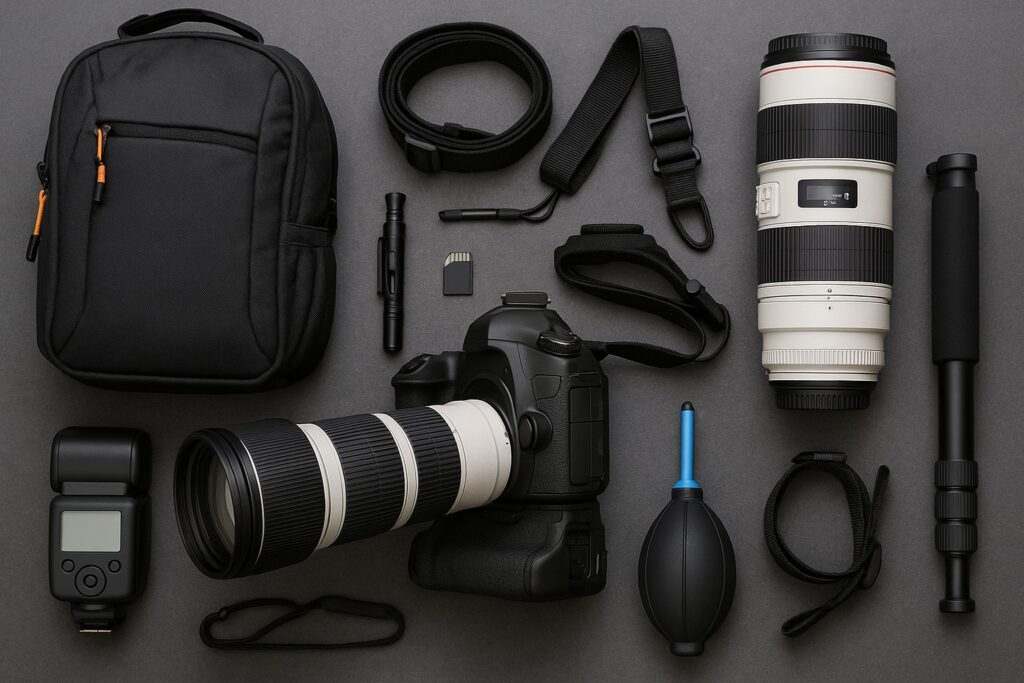
Must-Have Accessories for Sports Photographers on the Go

When you’re on the sidelines of a packed stadium or crouched near the finish line of a high-speed cycling race, every second counts. Sports photography isn’t just about snapping a quick shot—it’s about being ready, mobile, and fully equipped to catch fleeting moments of intensity and triumph. While your camera and lens are undoubtedly the stars of your kit, the real difference-maker lies in the supporting gear you bring along. Accessories are the unsung heroes that help you shoot longer, focus better, and work faster under pressure.

Let’s dive deep into the critical accessories every sports photographer should carry, whether you’re shooting under blazing sun, pouring rain, or intense indoor lighting.

Must-Have Accessories for Sports Photographers on the Go

1. High-Speed Memory Cards That Keep Up With the Action

Capturing continuous bursts of action is standard practice in sports photography. This means your memory card must be fast enough to handle the rapid-fire writing of large image files. When your subject is flying across the field or leaping for a dunk, there’s no time for buffering delays.

Look for cards with:

  • UHS-II or UHS-III classification
  • V60 or V90 video speed class
  • Write speeds above 150MB/s

Brands such as SanDisk Extreme Pro and Lexar Professional are industry favorites. Carry at least two or three backups; it’s not just smart—it’s essential.

2. Monopods and Tripods: Keeping Things Steady Without Losing Speed

Holding a long telephoto lens steady for hours is not only tiring—it can ruin your shots. A monopod gives you the freedom to move quickly while supporting the weight of your gear. For pre-planned shots, a lightweight tripod with a fluid head ensures smooth motion and clean panning.

Features to consider:

  • Quick-release mechanisms for rapid repositioning
  • Rotating or tilting heads for flexibility
  • Carbon fiber construction to reduce fatigue

3. Weather Protection You Can Rely On

No matter how great the forecast looks, outdoor sports always come with a degree of unpredictability. Sudden showers, dust clouds, or even a splash of Gatorade from the sidelines can spell trouble for unprotected gear.

Make sure you have:

  • Dedicated rain covers for camera bodies and lenses
  • A waterproof backpack with padded dividers
  • Quick-dry microfiber cloths and weatherproof lens wipes

Being prepared for the elements lets you keep shooting when others pack up.

4. Battery Backups and Power Solutions for Long Days

Your camera battery will drain faster than expected when you’re shooting continuously, zooming often, or transmitting files. The pros never leave for an assignment without spare batteries and portable charging options.

Recommended gear:

  • Multiple OEM batteries for your camera model
  • Dual battery chargers for efficient overnight charging
  • Portable USB power banks with fast charging support

Having an extra power source on hand is like having a spare set of eyes—you’ll thank yourself later.

5. Teleconverters: Reach Further Without Changing Your Lens

There will be times when you can’t get close to the action—think massive stadiums or closed-track events. A quality teleconverter extends your focal length without the need for a second bulky lens.

What to look for:

  • Compatibility with your lens and camera body
  • Minimal light loss (typically 1 to 2 stops)
  • Ability to retain autofocus performance

They’re compact, lightweight, and incredibly handy when space and speed are top priorities.

6. Camera Harnesses and Dual-Strap Systems for Comfort and Speed

Shooting for hours while carrying heavy gear can lead to neck and shoulder strain. A well-designed harness or strap system not only relieves pressure but keeps your gear accessible so you’re always ready to fire.

Ideal features:

  • Even weight distribution
  • Adjustable, breathable material
  • Space for dual camera setups

Brands like Peak Design and BlackRapid are praised for their durability and user comfort.

7. Lens Hoods and Protective Filters

Glare, flare, and smudges are common in outdoor environments. A lens hood helps block stray light and enhances contrast, while a UV or clear filter adds a layer of protection against accidental bumps or debris.

Pro tips:

  • Use bayonet-style hoods for secure attachment
  • Choose multi-coated filters to avoid image degradation

It’s a small investment for a big return in image clarity and lens safety.

8. Portable Lighting for Low-Light Situations

Even in well-lit arenas, shadows and inconsistent lighting can ruin an otherwise perfect shot. A compact flash or LED panel can give you the edge when the available light isn’t cutting it.

Essentials to check:

  • Adjustable brightness and color temperature
  • Fast recycling time for consecutive shots
  • Wireless remote triggering or hot shoe compatibility

Controlled light can mean the difference between a blurry shot and a portfolio-worthy image.

9. Earbuds or Noise-Cancelling Headphones

It might seem unrelated, but in noisy environments, focusing becomes difficult. High-quality earbuds or noise-cancelling headphones help you concentrate—especially when reviewing or editing images during breaks.

Choose:

  • Lightweight, in-ear models for portability
  • Active noise-cancellation for full immersion

Your ears and your workflow will thank you.

10. Laptops or Tablets With Built-in Card Readers

Modern sports photographers often work under deadlines. Quick image review, basic editing, and immediate file transfer are essential—especially for live coverage events.

Opt for:

  • Lightweight devices with long battery life
  • Models that support raw editing software
  • Built-in SD or CFexpress card readers

Being able to back up and deliver content on the go is no longer a luxury—it’s a necessity.


source: Pierre T. Lambert

Sports photography is as much about preparation as it is about precision. Having the right accessories in your gear bag means you’re always one step ahead of the action. These tools help you stay focused, flexible, and fast—key traits of every successful sports photographer.

Think of accessories as your support team. They don’t get the spotlight, but they enable you to shine. Build your kit with care, keep it organized, and upgrade as your skills and assignments evolve. The difference between a missed shot and a masterpiece often comes down to what’s in your bag.

Pack smart, shoot sharp, and let nothing stand between you and that winning shot.

The written content on this page was generated by ChatGPT.

Affordable Sports Photography Cameras for Beginners

Getting started in sports photography can feel intimidating—especially when you’re on a budget. You might be wondering, “Do I really need a top-of-the-line camera to capture sharp, fast-paced action?” The answer is no. With the right entry-level gear, some practice, and a few insider tips, beginners can capture powerful sports images without spending thousands of dollars.

This guide is designed for aspiring sports photographers who want to balance affordability with performance. We’ll explore beginner-friendly cameras that handle speed, motion, and changing light conditions well—and we’ll break down what really matters when selecting your first sports photography setup.

Affordable Sports Photography Cameras for Beginners

What to Look for in a Sports Photography Camera (And Why It Matters)

Photographing sports is very different from snapping portraits or landscapes. You need a camera that can keep up with action, track moving subjects, and shoot rapid bursts without hesitation. Here’s what to prioritize:

  • Continuous Autofocus: This feature is essential for tracking athletes or players as they move quickly through the frame.
  • Fast Frames Per Second (fps): A higher fps lets you fire off a quick succession of shots—helping you capture the peak moment.
  • Low-Light Capability: Many games and events happen in less-than-ideal lighting, so solid ISO performance is a must.
  • Interchangeable Lenses: Flexibility in choosing lenses will allow you to adapt to different sports and shooting distances.

The Best Budget Cameras for Beginner Sports Photographers

Here are five budget-friendly cameras that offer impressive performance for their price—and work well for sports photography newcomers.

1. Canon EOS Rebel T8i (EOS 850D)

If you’re new to DSLRs, the Rebel T8i is a welcoming introduction. It’s easy to navigate but still powerful under the hood.

  • Burst Rate: 7 fps
  • Autofocus: Dual Pixel CMOS AF with Face and Eye Detection
  • Ideal For: Team sports, cycling, and track events in daylight
  • Strengths: Optical viewfinder for zero lag and strong color reproduction
2. Nikon D5600

A reliable and ergonomic DSLR that performs consistently across different conditions. Perfect for learning and growing into sports photography.

  • Burst Rate: 5 fps
  • AF System: 39-point autofocus with subject tracking
  • Ideal For: Field sports, school events, youth games
  • Strengths: Excellent battery life and comfortable handling
3. Sony Alpha a6100

For those interested in mirrorless options, Sony’s a6100 combines compactness with high-end features.

  • Burst Rate: 11 fps
  • AF System: Real-time tracking with 425 phase-detection points
  • Ideal For: Basketball, skateboarding, BMX
  • Strengths: Lightning-fast AF and easy-to-use interface
4. Fujifilm X-T30 II

Stylish, portable, and fast—this camera packs premium features into a smaller, more affordable package.

  • Burst Rate: Up to 20 fps with electronic shutter
  • AF System: Hybrid system that adapts quickly to moving subjects
  • Ideal For: Indoor sports, court games, fast action
  • Strengths: Vibrant JPEG output and strong low-light capability
5. Panasonic Lumix G85

Weather-sealed and dependable, this Micro Four Thirds mirrorless camera is lightweight and surprisingly versatile.

  • Burst Rate: 9 fps (single AF), 6 fps (continuous AF)
  • AF System: Contrast-based Depth From Defocus (DFD)
  • Ideal For: Outdoor events, motorsports, unpredictable weather
  • Strengths: Durable build and excellent video features

Lens Options That Pair Well Without Breaking the Bank

Even a solid camera body won’t go far without the right lens. Entry-level shooters should consider these options:

  • Canon EF-S 55-250mm f/4-5.6 IS STM: Great reach for field sports; includes image stabilization.
  • Nikon AF-P DX 70-300mm f/4.5-6.3G ED: Affordable and sharp for most outdoor sports.
  • Sony 55-210mm f/4.5-6.3 OSS: Excellent complement to the a6000 series for distance shooting.

Lenses with focal lengths in the 70–300mm range are ideal for sideline photography. If you’re shooting indoor events, consider brighter prime lenses in the 85mm to 135mm range.

Real-World Advice: Saving Money Without Compromising Results

Getting professional-looking photos doesn’t require pro-level gear. Here are a few smart strategies to stay on budget:

  • Shop Refurbished: Brands like Canon, Nikon, and Sony sell refurbished models with warranties.
  • Check Trusted Used Retailers: Sites like KEH, MPB, and Adorama offer used gear that’s tested and graded.
  • Buy a Kit: Many entry-level cameras come in bundles with a starter lens, bag, and memory cards.
  • Start with One Good Lens: Instead of buying multiple cheap lenses, invest in one versatile lens to master before expanding your kit.

How to Get the Most Out of Entry-Level Gear

Your gear might be affordable, but your results can still look top-tier. Here’s how:

  • Shoot in Manual or Shutter Priority Mode: Control your shutter speed to freeze or blur motion effectively.
  • Learn Panning: This technique blurs the background while keeping the subject sharp—ideal for cycling, racing, and track shots.
  • Anticipate the Action: Predict where players or athletes are heading so you can frame your shot in advance.
  • Use Burst Mode Wisely: Don’t overshoot—timing matters more than volume.
source: Jason Vong

Starting out in sports photography doesn’t mean you have to sacrifice quality for price. With today’s technology, budget-friendly cameras are more powerful and accessible than ever. From DSLR classics like the Canon T8i to mirrorless marvels like the Sony a6100, there’s something for every beginner looking to dive into action photography.

Focus on understanding your gear, practicing consistently, and refining your timing—and your images will start to rival those taken with much pricier setups. Sports photography is about anticipation, energy, and storytelling—and the right camera is simply your tool to bring those moments to life.

The written content on this page was generated by ChatGPT.