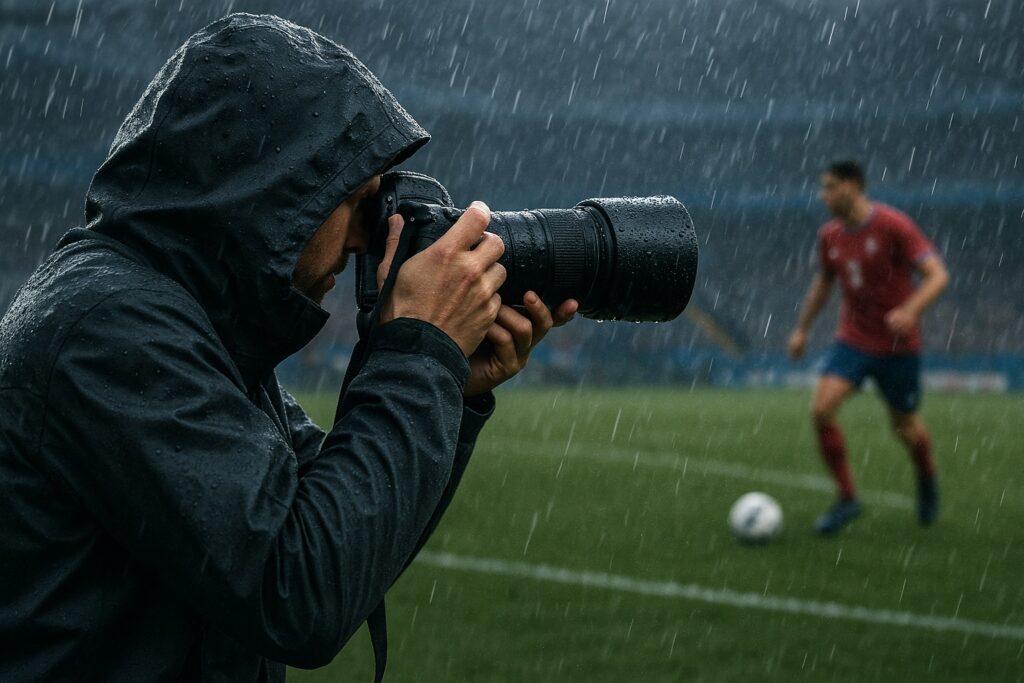
If you’ve ever tried capturing a fast-paced sports event in low light, you already know how challenging it can be. Stadiums, gymnasiums, and arenas don’t always provide ideal lighting conditions. A well-timed flash, however, can make the difference between a dull, blurry frame and a vivid, high-impact shot that captures the intensity of the moment. For sports photographers who want every image to tell a story, mastering flash and lighting gear is absolutely essential.
The right lighting setup helps freeze movement, enhance colors, and bring life to even the most chaotic scenes. In this guide, we’ll break down the best flash units and lighting gear available today, along with tips on how to use them effectively for different sports environments.

The Power of Good Lighting in Sports Photography
Lighting is more than just illumination — it’s an artistic tool that defines the energy and emotion of an image. In sports photography, where every second counts, good lighting allows you to capture motion and emotion with accuracy. A subtle flash can highlight a sprinter’s muscles under strain, while diffused lighting can soften shadows on a basketball player’s face.
When you’re dealing with unpredictable weather, indoor shadows, or night events, the flash becomes your silent partner. It helps retain sharpness, avoids excessive noise in your images, and ensures that color accuracy isn’t lost due to uneven light. The right lighting gear also gives you creative control — whether you want to freeze sweat droplets midair or convey the drama of a dark, rain-soaked finish line.
What to Look for When Choosing Flash Units
Sports photographers don’t just need brightness; they need speed, control, and consistency. Here are some key features to consider when picking the perfect lighting setup:
- High-Speed Sync (HSS): Lets you shoot with flash at shutter speeds beyond the normal sync limit (like 1/250s). Perfect for freezing high-speed motion without losing ambient light balance.
- Fast Recycle Times: Rapid recovery between flashes allows for more continuous shooting during crucial moments.
- Durability: Sports venues can be dusty, wet, or crowded. Choose flashes that can handle rough environments and long sessions.
- Wireless Functionality: Off-camera lighting setups are easier to manage when you can trigger multiple flashes remotely.
- Adjustable Output: Being able to tweak flash power manually gives you flexibility in balancing natural and artificial light.
Best Flash Units for Sports Photography in 2025
1. Godox V1 Pro
This flash has become a go-to for event and sports photographers alike. Its round head design creates soft, natural light, while its quick 1.5-second recycle time ensures you never miss a moment. The V1 Pro also supports wireless TTL and high-speed sync, making it a dependable choice for both indoor arenas and outdoor fields.
2. Canon Speedlite EL-5 / Nikon SB-5000 / Sony HVL-F60RM2
Each of these manufacturer-specific flashes is fine-tuned for speed and reliability. They excel in burst situations, delivering consistent light output with excellent color reproduction. Their compact build and intuitive controls make them ideal for on-the-go sports coverage.
3. Profoto A10
If you’re after professional-grade lighting, the Profoto A10 offers premium performance. Its output is smooth, and its battery endurance is exceptional. Bluetooth connectivity allows seamless control through your smartphone, giving you a portable studio setup even on the sidelines.
4. Godox AD300Pro / AD400Pro
When you’re shooting larger events or outdoor games, power is everything. The AD300Pro and AD400Pro strobes deliver robust output, fast recycling, and battery longevity. They’re lightweight, easy to transport, and built to handle demanding sessions.
5. Elinchrom ONE and Westcott FJ80 II
These compact, hybrid-friendly lights are designed for photographers who alternate between stills and video. Both provide balanced color temperatures, quick setup, and versatile mounting options — perfect for adapting to different environments quickly.
Accessories That Elevate Your Lighting Game
Even the best flash units perform better when paired with the right accessories. Here’s what every serious sports photographer should have in their kit:
- Light Stands and Mounts: Keep your flashes steady and secure, even in windy outdoor conditions.
- Softboxes and Diffusers: Help reduce harshness and create a more flattering, even spread of light.
- Wireless Triggers: Reliable triggers ensure your off-camera flashes fire in sync with each shot.
- Extra Batteries: Essential for endurance events or long tournament days where recharging isn’t an option.
- Reflectors: Perfect for redirecting natural light when flash use isn’t allowed.
How to Use Flash Effectively During Sports Events
- Be Mindful of the Players: Avoid blinding athletes or interfering with gameplay. Aim your light strategically to minimize distraction.
- Master High-Speed Sync: Combine HSS with moderate flash output to capture sharp, vivid images in bright conditions.
- Mix Flash with Ambient Light: Let your flash fill in shadows rather than overpower the natural light available.
- Use Multiple Angles: Experiment with off-camera flashes placed around the field or court to create depth and texture.
- Arrive Early and Test: Conditions vary between venues — run lighting tests before the action begins.
Common Flash Mistakes to Avoid
- Overpowering the Scene: Excessive flash can flatten your image or create unrealistic lighting.
- Ignoring White Balance: Flash color temperature often differs from venue lighting; adjust accordingly to avoid unnatural tones.
- Underestimating Battery Needs: Always bring spare batteries — flash recycle times slow dramatically with low power.
- Overreliance on Built-In Flash: Pop-up flashes lack range and flexibility for high-speed events.
- Not Understanding Venue Restrictions: Some arenas prohibit flash photography — know the rules before setting up.
Mixing Flash and Continuous Lighting
Many modern sports photographers use a hybrid setup that combines flash units with continuous LED panels. Continuous lights, such as the Aputure Amaran 60x II and Nanlite Forza 60B, provide constant illumination and allow you to preview how light falls on your subject in real time. These lights are especially useful for hybrid shooters working between photo and video during tournaments or press events.
Continuous lighting also creates a smoother workflow when switching between stills and clips, ensuring consistency in exposure and color grading. Pairing LED lights with your flash system gives you control over mood and motion — whether you’re highlighting a victorious moment or documenting the tension before the start.
Maintaining and Transporting Your Lighting Gear
Good lighting gear can be a significant investment, so maintenance matters. After each shoot:
- Inspect Flash Heads and Ports: Check for dust or debris that can affect performance.
- Store in Padded Bags: Protect against moisture and impact during travel.
- Recharge Properly: Avoid overcharging batteries to extend their lifespan.
- Use Silica Gel Packs: Prevent humidity damage inside your gear bag.
Keeping your equipment clean and dry not only ensures longevity but also guarantees consistent lighting results every time you shoot.
Final Thoughts
Lighting is often the secret ingredient that separates professional-level sports photography from amateur snapshots. It captures not just the motion, but the emotion — the grit of a football tackle, the focus in a swimmer’s eyes, or the power in a sprinter’s stride. With the right combination of flash units, lighting accessories, and technique, you can freeze those decisive moments in vivid, cinematic detail.
As you experiment with your lighting setups, remember that every sport and venue presents a different challenge. Learn to adapt, stay patient, and treat light as part of the action rather than a technical afterthought. When used with creativity and precision, your flash becomes more than a tool — it becomes your artistic signature on every frame.
The written content on this page was generated by ChatGPT.