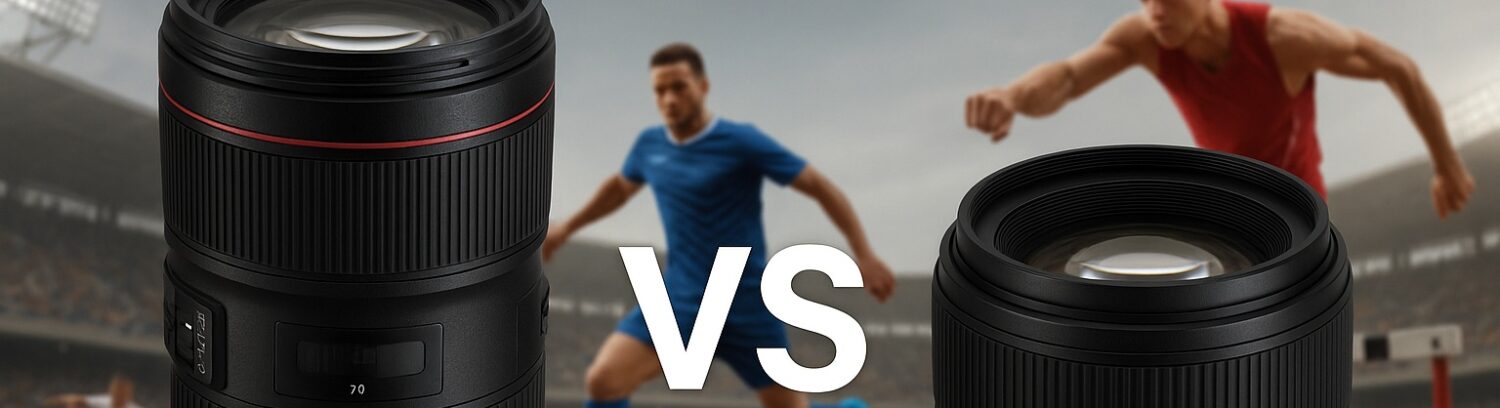
How to Use Telephoto Lenses to Capture Close-Up Sports Action

Few moments in photography are as thrilling as freezing an athlete in mid-stride or capturing the grit on a player’s face from across the field. Sports photography is about anticipation, timing, and precision—and a telephoto lens can be your most valuable ally in achieving all three. These lenses bring faraway subjects up close, giving your images the intensity and focus that turn ordinary sports shots into works of art. But mastering a telephoto lens isn’t as simple as zooming in; it requires a deeper understanding of optics, technique, and timing.

In this guide, we’ll explore how to use telephoto lenses to capture dynamic, close-up sports action. You’ll learn how to select the right lens, optimize your camera settings, stabilize your shots, and anticipate those fleeting moments that define athletic competition.

How to Use Telephoto Lenses to Capture Close-Up Sports Action

The Power of Distance: Why Telephoto Lenses Are Essential

At first glance, the advantage of a telephoto lens seems obvious—it lets you photograph distant subjects. But what makes it indispensable for sports photographers is more nuanced. A good telephoto lens doesn’t just magnify; it compresses perspective, pulls your subject closer to the background, and isolates the action beautifully. This compression adds drama and depth, transforming a crowded stadium scene into a focused, storytelling image.

When used correctly, telephoto lenses allow you to portray emotion, movement, and detail all in one frame. You can capture the determination in a sprinter’s eyes, the tension of a goalkeeper’s stance, or the triumph of a finish-line celebration—all while standing safely on the sidelines.


Choosing the Right Telephoto Lens

Not all telephoto lenses perform the same, and your choice depends heavily on the type of sport and shooting conditions. Understanding focal lengths is the first step to making a smart investment.

  • 70–200mm: A versatile workhorse for field and indoor sports such as basketball, volleyball, or soccer. The zoom range gives you flexibility to frame mid-range and tighter action without constantly changing lenses.
  • 300mm to 400mm: Ideal for outdoor events like baseball, tennis, and cycling. These focal lengths provide reach without sacrificing image sharpness or focus speed.
  • 500mm and Beyond: Best suited for large venues and motorsports. These lenses are powerful but often require a monopod or tripod for support due to their weight.

Zoom lenses offer convenience and adaptability, while prime telephoto lenses (fixed focal lengths) provide superior sharpness and faster apertures. Your choice will depend on your shooting style, access distance, and the lighting conditions of the sport.


Mastering Camera Settings for High-Speed Action

Shooting sports with a telephoto lens requires more than a steady hand—it demands precise camera settings to capture sharp, high-impact images. Here’s how to dial in your setup:

  • Shutter Speed: Fast shutter speeds are essential for freezing motion. Start at 1/1000s for most sports, but adjust according to movement. For creative blur that conveys motion, drop it to 1/250s or slower.
  • Aperture: A wide aperture (f/2.8 to f/4) allows more light into the lens and isolates your subject from the background, giving that professional, cinematic look.
  • ISO: Keep ISO low in bright daylight (100–400) and increase it in low light. Don’t hesitate to push ISO higher if it means maintaining a fast shutter speed.
  • Autofocus Mode: Use continuous autofocus (AF-C or AI Servo) to track subjects as they move unpredictably across the field.
  • Burst Mode: Continuous shooting ensures you don’t miss critical moments—especially in sports where expressions and body movements change in milliseconds.

Techniques for Sharp, Impactful Telephoto Shots

  1. Stabilization Matters: Telephoto lenses magnify not only the subject but also camera shake. A monopod offers a perfect balance between mobility and stability, especially during long events.
  2. Follow the Motion: Practice smooth panning to match the athlete’s movement. This helps retain clarity while maintaining a sense of speed.
  3. Anticipate the Play: Study the rhythm of the sport. Predict where the ball, runner, or player will be before the action happens. The best shots often come from being ready, not reacting.
  4. Use Focus Limiting: If your lens has a focus limiter, activate it to prevent the camera from hunting across unnecessary ranges.
  5. Compose Thoughtfully: Leave room in front of moving subjects to convey direction and purpose. A tight crop can be powerful, but balance it with storytelling context.

Perfecting Shots Through Post-Processing

Post-processing is where great photos become unforgettable. Even perfectly exposed telephoto shots benefit from fine-tuning.

  • Enhance Clarity and Detail: Boost micro-contrast and sharpness to emphasize sweat, fabric texture, and motion.
  • Adjust White Balance: Sports venues often mix natural and artificial lighting—correcting color temperature ensures accurate tones.
  • Crop Intelligently: Tighten your frame to draw focus to the athlete’s expression or moment of impact.
  • Reduce Noise: Long lenses in low light can introduce grain. Noise reduction tools in Lightroom or Photoshop can help retain quality without losing detail.

Mistakes to Watch Out For

Even experienced photographers make errors when using telephoto lenses. Avoid these pitfalls:

  • Over-Zooming: Filling the frame too tightly limits your ability to track motion or recompose quickly.
  • Shaky Hands: Even a small tremor can blur the image. Use lens stabilization or physical supports whenever possible.
  • Ignoring Backgrounds: A cluttered or bright background can pull attention away from the subject. Adjust your position or aperture to create clean, minimal backdrops.
  • Neglecting Light Direction: Backlighting can add drama, but too much can wash out the subject. Move around the field to find the best light angles.

Real-World Example: The Energy of a Cycling Race

Imagine standing at a bend during a cycling competition. You position your 300mm lens, pre-focus on the curve, and wait. As the riders lean into the turn, you pan smoothly, following the lead cyclist while maintaining a fast shutter speed. The result? A razor-sharp subject with just enough background blur to capture the rush of motion. That’s the art of telephoto sports photography—precision, patience, and instinct working together.

source: B&H Photo Video Pro Audio

Final Thoughts

Telephoto lenses are more than tools for magnification—they’re extensions of your vision. They allow you to capture the raw essence of sports: effort, motion, and triumph. With the right combination of gear, technique, and intuition, you can transform fleeting moments into timeless images.

Whether you’re documenting a championship game, a local marathon, or a fast-paced cycling race, a telephoto lens helps you bridge the gap between distance and intimacy. Every frame becomes a chance to tell the story of passion and perseverance—one click at a time.

The written content on this page was generated by ChatGPT.

Comparing DSLR vs Mirrorless Cameras for Sports Photography

There’s nothing quite like the thrill of freezing a moment during a fast-paced sports match—the precise second a cyclist leans into a turn, or a basketball player leaps toward the net. But achieving those perfect shots often comes down to the camera in your hands. For years, sports photographers have debated: Should you use a DSLR or go mirrorless? Both camera types offer advantages, but understanding how each performs in a live, action-heavy environment is key.

In this guide, we’re taking a deeper dive into what separates DSLRs and mirrorless cameras specifically for sports photography. From autofocus performance to burst rates and battery longevity, we’ll break down what matters most when you’re shooting at speed.

Comparing DSLR vs Mirrorless Cameras for Sports Photography

Understanding the Core Differences

Before we jump into performance details, let’s quickly outline how DSLRs and mirrorless cameras differ.

  • DSLR (Digital Single-Lens Reflex): These cameras use a mirror and prism system to direct light from the lens to the optical viewfinder. When you press the shutter, the mirror flips up, allowing light to hit the sensor.
  • Mirrorless: As the name implies, these cameras don’t use a mirror. Instead, light hits the sensor directly, and you preview the image using an electronic viewfinder (EVF) or LCD screen.

The absence of a mirror mechanism in mirrorless cameras allows for design flexibility, speed improvements, and weight reduction. But how do these differences translate into performance on the field?


Autofocus Performance in Real-Time Action

One of the biggest priorities for sports photographers is autofocus reliability. Fast-moving subjects and unpredictable changes in direction can challenge even the best cameras.

  • DSLRs: Professional DSLRs, like the Nikon D6 or Canon EOS-1D X Mark III, feature highly advanced phase-detection autofocus systems. These are time-tested and perform exceptionally well through the optical viewfinder.
  • Mirrorless: The latest mirrorless cameras, including the Sony A9 II, Canon EOS R3, and Nikon Z9, have revolutionized autofocus. They use sensor-based phase detection and AI-enhanced subject tracking, allowing the camera to lock onto athletes’ eyes or helmets with impressive accuracy—even when they’re in motion.

Verdict: Mirrorless cameras, especially the high-end models, now edge out DSLRs thanks to real-time, AI-assisted AF tracking that excels under pressure.


Burst Shooting: Capturing the Perfect Split-Second

When you’re trying to capture a fast-moving sequence—like a sprinter crossing the finish line—burst rate is critical.

  • DSLRs: Many high-end DSLRs offer burst shooting up to 14-16 frames per second (fps) with full autofocus and exposure metering. However, these speeds often rely on a mechanical shutter, which introduces slight lag and noise.
  • Mirrorless: Mirrorless systems can go beyond that. With electronic shutters, they shoot up to 20 fps (or even more), silently and without viewfinder blackout. This allows you to see and capture the action as it happens without interruption.

Verdict: Mirrorless cameras have taken the lead here, offering not just higher frame rates, but smoother, quieter operation.


The Viewfinder Debate: Optical vs Electronic

  • DSLRs: Optical viewfinders provide a direct, real-time view of the scene with no delay. Many sports photographers still appreciate the clarity and reliability, especially in bright outdoor settings.
  • Mirrorless: EVFs have come a long way. They now offer high refresh rates, minimal lag, and even show exposure, white balance, and depth of field adjustments in real-time.

Verdict: It comes down to preference. Some photographers prefer the natural look of an OVF, while others love the preview control of an EVF.


Battery Life in the Field

You’re likely to be shooting for hours at a sports event, so battery life matters more than most people realize.

  • DSLRs: Known for their stamina, DSLRs often last over 1,000 shots on a single charge. Their power-efficient optical systems conserve battery over long shoots.
  • Mirrorless: Historically weaker in this category, mirrorless battery life has improved but generally remains lower, with many models offering 500–700 shots per charge.

Verdict: DSLRs win this round, making them more reliable for full-day events without spare batteries.


Lens Availability and Compatibility

  • DSLRs: Boast decades-long ecosystems. Canon EF and Nikon F mount systems include everything from ultra-wide to super-telephoto, with options for every budget.
  • Mirrorless: New systems like Canon RF, Nikon Z, and Sony E are growing rapidly. While native lens options continue to expand, users can also adapt DSLR lenses—with varying degrees of compatibility and performance.

Verdict: DSLRs offer more mature ecosystems—for now. Mirrorless lens options are catching up quickly, especially with native glass designed for speed and sharpness.


Size, Weight, and Mobility

  • DSLRs: Often large and heavy due to the mirror assembly and robust construction. While durable, they can be tiring to carry all day.
  • Mirrorless: Designed for portability, mirrorless bodies are lighter and more compact. This is a big win when you’re moving between fields, courts, or tracks.

Verdict: Mirrorless wins on mobility, especially when shooting handheld or in tight spaces.


Value for Your Investment

  • DSLRs: Offer incredible value, especially with used or older models. You can get pro-level performance at a lower cost.
  • Mirrorless: Higher initial cost, but you gain advanced tech and long-term relevance as the industry shifts away from DSLR systems.

Verdict: DSLR for budget-conscious buyers. Mirrorless for future-proof features.

source: Wex Photo Video

Choosing the Right Tool for the Job

If you’re entering the world of sports photography or upgrading your gear, both camera systems can serve you well—but your choice should reflect your priorities.

Consider a DSLR if:

  • You already own lenses compatible with your system
  • You need long battery life for extended shoots
  • You’re looking for high performance at a lower price

Consider Mirrorless if:

  • You want faster, smarter autofocus with face and eye tracking
  • Portability and quiet shooting matter
  • You’re ready to invest in the latest technology with long-term benefits

Sports photography isn’t just about having the best specs—it’s about understanding your gear and knowing how to use it under pressure. Mirrorless cameras may be the future, but DSLRs still hold their ground in many real-world scenarios. Whichever path you choose, remember: the best camera is the one you know well and can rely on when the action unfolds.

The written content on this page was generated by ChatGPT.