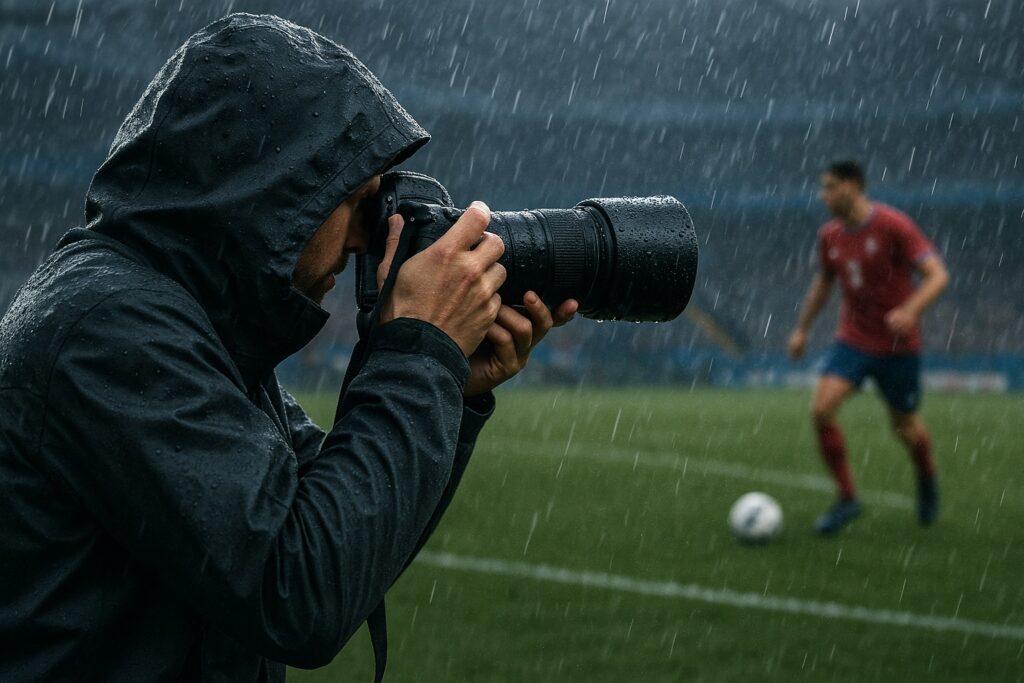
There is a split second in every sporting event that tells the entire story. It might be a soccer player striking the winning goal, a basketball player soaring toward the rim, a baseball bat connecting with the ball, or a cyclist crossing the finish line with pure determination on their face. These moments happen so quickly that even experienced photographers can miss them if their camera isn’t ready.
This is where burst mode becomes one of the most valuable features in sports photography. Instead of relying on a single press of the shutter button, burst mode captures a rapid sequence of images, dramatically increasing your chances of getting the perfect frame.
Whether you’re photographing youth sports, professional competitions, school athletic events, or local tournaments, understanding how to use burst mode effectively will help you consistently capture breathtaking action shots that showcase speed, emotion, and athletic performance.
This guide explains everything you need to know about burst mode, including camera settings, timing techniques, autofocus tips, memory card selection, and professional secrets that can elevate your sports photography.
What Is Burst Mode?
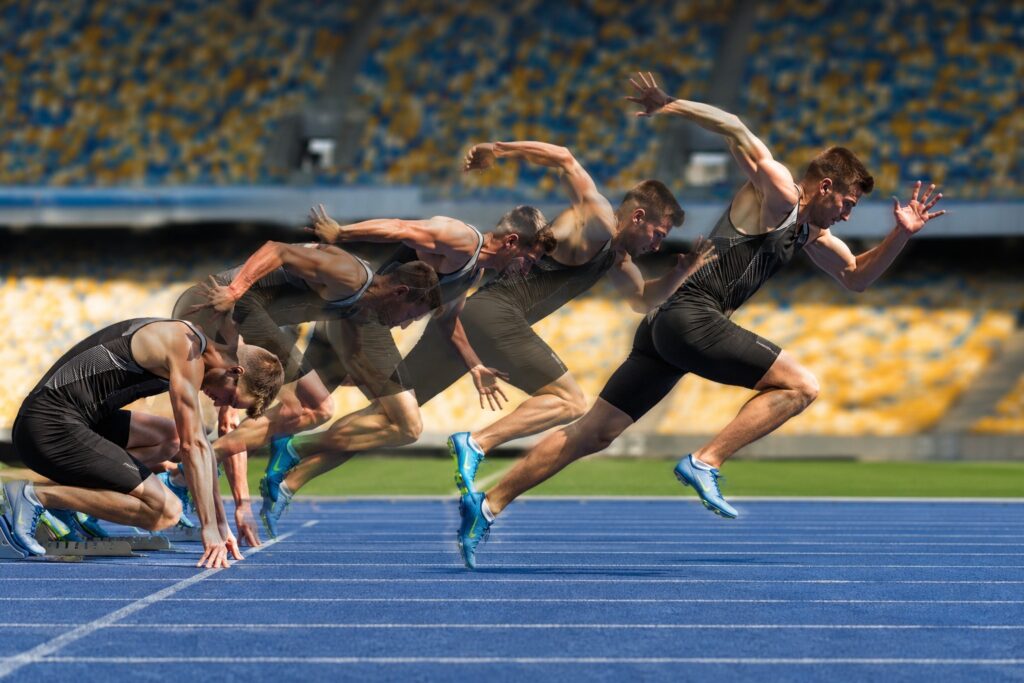
Burst mode, sometimes called Continuous Shooting Mode, allows your camera to capture multiple photographs every second while the shutter button remains pressed.
Instead of taking only one image, modern cameras can shoot anywhere from:
- 5 frames per second (FPS)
- 10 FPS
- 20 FPS
- 30 FPS
- Even over 100 FPS on specialized professional cameras
Rather than hoping your timing is perfect, burst mode gives you an entire sequence of photographs, allowing you to choose the exact instant where everything comes together.
Why Burst Mode Is Essential for Sports Photography
Sports are unpredictable.
Athletes constantly change direction, jump, dive, accelerate, collide, and celebrate—all within fractions of a second.
Using single-shot mode means you’re gambling on perfect timing.
Burst mode dramatically improves your odds because it captures every stage of the movement.
Examples include:
- The exact moment a football player catches the ball
- A tennis racket making contact with the ball
- A gymnast suspended in mid-air
- A skateboarder performing a trick
- A baseball pitcher releasing the ball
- A swimmer breaking through the water
- A cyclist leaning into a sharp corner
Having multiple frames lets you choose the strongest composition instead of settling for “almost.”
How Burst Mode Works
Every camera has a maximum frame rate.
Professional sports cameras are built with incredibly fast processors and image buffers, allowing photographers to shoot continuously without slowing down.
When you hold the shutter button:
- The autofocus continuously tracks your subject.
- The shutter fires repeatedly.
- Images are temporarily stored in the camera’s internal buffer.
- The photos are then written to your memory card.
A fast buffer and memory card are just as important as a fast camera.
Choosing the Right Continuous Shooting Mode
Many cameras include different continuous shooting speeds.
These commonly include:
Low-Speed Continuous
Ideal for slower sports such as:
- Golf
- Bowling
- Archery
- Horse shows
Lower frame rates produce fewer unnecessary images.
High-Speed Continuous
Perfect for:
- Soccer
- Basketball
- Football
- Baseball
- Volleyball
- Rugby
- Hockey
High-speed burst captures every important movement during fast action.
Silent Continuous Shooting
Mirrorless cameras often include silent electronic burst mode.
Advantages include:
- No distracting shutter sound
- Better for indoor events
- Excellent for golf tournaments
- Great for gymnastics competitions
- Useful during tennis matches
Always verify whether silent shooting causes rolling shutter distortion during very fast movement.
Best Camera Settings for Burst Mode
Burst mode performs best when combined with the proper exposure settings.
Shutter Speed
Sports demand fast shutter speeds.
General recommendations:
- Running: 1/1000 second
- Soccer: 1/1250 second
- Basketball: 1/800 second
- Football: 1/1250 second
- Tennis: 1/1600 second
- Baseball: 1/1600 second
- Cycling: 1/1600 second
- Motorsports: 1/2000 second
If you intentionally want motion blur, slower speeds can produce artistic results.
Aperture
Choose wider apertures whenever possible.
Examples include:
- f/2.8
- f/4
- f/5.6
Benefits include:
- Faster shutter speeds
- More background blur
- Better subject isolation
- Improved low-light performance
ISO
Adjust ISO according to lighting.
Typical settings include:
- ISO 100–200 for bright daylight
- ISO 400–800 for cloudy weather
- ISO 1600–3200 for indoor arenas
- ISO 6400 or higher for nighttime sports
Modern cameras handle higher ISO values much better than older models.
Pair Burst Mode with Continuous Autofocus
Burst mode alone isn’t enough.
You also need continuous autofocus.
Different camera brands use different names:
- Canon — AI Servo AF
- Nikon — AF-C
- Sony — AF-C
- Fujifilm — Continuous AF
- OM System — C-AF
Continuous autofocus predicts movement while your camera keeps firing.
This combination dramatically increases the number of sharp images.
Focus Tracking Makes the Difference
Today’s mirrorless cameras use advanced subject detection powered by artificial intelligence.
Features may include:
- Eye detection
- Face detection
- Human tracking
- Animal tracking
- Vehicle tracking
When photographing sports, athlete tracking helps keep your subject sharp even when other players cross in front of them.
Anticipation Is Better Than Holding the Shutter Forever
One common mistake beginners make is holding down the shutter during the entire game.
This quickly fills memory cards, slows editing, and overwhelms your camera’s buffer.
Professional sports photographers anticipate the action.
Examples include:
- A striker approaching the goal
- A quarterback preparing to throw
- A sprinter entering the finish line
- A volleyball player jumping for a spike
- A cyclist approaching a dramatic corner
Short, controlled bursts are usually more effective than continuous shooting for several minutes.
Understanding Camera Buffer Limits
Every camera eventually reaches its buffer limit.
Once the buffer fills:
- Shooting slows down
- Frame rate drops
- Images take longer to save
You can reduce buffer problems by:
- Using fast memory cards
- Shooting JPEG instead of RAW when appropriate
- Using compressed RAW formats
- Limiting unnecessary bursts
- Buying cameras with larger internal buffers
Use High-Speed Memory Cards
Your memory card plays a huge role in burst photography.
Fast cards empty the camera buffer much quicker.
Recommended options include:
- UHS-II SD cards
- CFexpress Type A
- CFexpress Type B
- XQD cards (supported cameras)
Slower cards often become the biggest bottleneck during continuous shooting.
Perfect Timing Still Matters
Burst mode isn’t a substitute for timing.
Instead, it enhances good timing.
Start your burst just before the expected action.
Continue briefly after the action ends.
This ensures you capture:
- Build-up
- Peak action
- Follow-through
- Athlete reactions
- Celebrations
Sometimes the celebration after the winning goal becomes the most memorable photograph.
Sports That Benefit Most from Burst Mode
Almost every sport benefits from continuous shooting.
Examples include:
Football
Capture tackles, catches, interceptions, and touchdowns.
Soccer
Freeze headers, bicycle kicks, goalkeeper saves, and celebrations.
Basketball
Perfect for dunks, rebounds, steals, and jump shots.
Baseball
Ideal for swings, pitching, catches, and slides into home plate.
Volleyball
Excellent for spikes, blocks, serves, and diving saves.
Cycling
Capture riders sprinting, climbing hills, navigating corners, and crossing finish lines.
Swimming
Photograph splashes, dives, flip turns, and victory moments.
Gymnastics
Burst mode captures twists, flips, and graceful landings.
Improve Composition While Shooting Bursts
Don’t forget composition simply because your camera is shooting rapidly.
Keep in mind:
- Leave space ahead of moving athletes.
- Avoid cutting off hands, feet, or equipment.
- Watch for distracting backgrounds.
- Use leading lines whenever possible.
- Position yourself for clean backgrounds.
Great composition makes action photos feel even more powerful.
Common Burst Mode Mistakes
Many photographers misuse burst mode.
Avoid these common errors:
Holding the shutter too long
This creates thousands of unnecessary images.
Ignoring autofocus settings
Burst mode cannot compensate for poor focus.
Using slow memory cards
Your camera cannot maintain peak performance.
Poor timing
Burst mode helps, but anticipation remains essential.
Shooting everything in RAW
RAW files provide maximum editing flexibility but consume more storage and fill the buffer faster. Consider your workflow and the demands of the event.
Post-Processing Burst Sequences
After the event, you’ll likely have hundreds—or even thousands—of images.
An organized workflow saves time:
- Review each burst sequence together.
- Delete obvious misses first.
- Compare similar frames side by side.
- Keep only the sharpest and most expressive images.
- Edit exposure, color, contrast, and cropping consistently.
Culling efficiently is just as important as capturing the action.
Professional Tips for Better Burst Photography
Experienced sports photographers often rely on these strategies:
- Learn the rules of the sport so you can anticipate key moments.
- Position yourself where the action is most likely to happen.
- Use back-button focus to separate focusing from the shutter release.
- Shoot from different heights to create more dynamic perspectives.
- Watch athletes through the viewfinder even after the peak action—reactions often make the strongest images.
- Practice regularly at local sporting events to build your timing and confidence.
Final Thoughts
Burst mode is one of the most powerful tools available to sports photographers because it dramatically increases the likelihood of capturing the exact instant that defines a game, race, or competition. Combined with fast shutter speeds, continuous autofocus, thoughtful composition, and anticipation, it allows you to create images that are sharp, energetic, and emotionally engaging.
The secret isn’t simply firing as many frames as possible—it’s knowing when to use burst mode and how to pair it with solid photographic technique. As you gain experience, you’ll begin to anticipate decisive moments before they happen, resulting in fewer missed opportunities and more memorable photographs.
Whether you’re photographing youth leagues, college athletics, or professional sporting events, mastering burst mode will help you preserve the excitement, determination, and emotion that make sports photography so compelling. Practice often, refine your timing, and you’ll soon build a portfolio filled with action-packed images that capture the very best moments of every competition.
The written content on this page was generated by ChatGPT.